
Introduction
A parking garage, a Midwest factory, a quiet stretch of coastline. Each one can turn a simple garment into a story. That's the promise of on-location fashion photography: real environments give clothing context, movement, and a visual identity a white backdrop can't fake.
But here's the catch many brands miss. A gorgeous location isn't automatically a useful one. It needs to support your brand story, your garments, your lighting plan, your crew, and the actual deliverables you need for launch.
Many teams struggle with this exact gap: they fall in love with a backdrop before checking access, permits, or whether the light will even cooperate that day.
This guide walks through choosing a setting, comparing location types, handling permissions and logistics, and building a complete set of campaign-ready images from a single shoot day.
Key Takeaways
- Match location to mood, customer, product category, and channel before chasing scenery
- Scout for access, power, permits, weather, and crowd activity, not just aesthetics
- Build a shot list covering hero images, full looks, details, movement, and social content
- Choose a photographer who plans production, not just one who shows up with a camera
How to Choose the Right Location for Your Fashion Concept
Start with the objective, not the map. Editorial storytelling has different location needs than an ecommerce lifestyle shoot, a lookbook, or paid social content built for a scroll-stopping vertical crop.
Define the goal first:
- Editorial storytelling (concept-driven, mood over clarity)
- Ecommerce-supporting lifestyle imagery (product must read clearly)
- Seasonal launch or lookbook (consistency across many looks)
- Paid social or active-lifestyle campaign (movement, energy, quick recognition)
Match Visual Qualities to Brand Message
Clean architecture supports minimalist or premium apparel. Textured walls and city streets support streetwear. Trails and open landscapes support outdoor or active brands. Adobe's fashion photography guide frames this as a visual dialogue between clothing and set. The garment and the background should either contrast for impact or share a color theme for cohesion, not fight for attention.
Check Whether the Setting Competes With the Clothing
Before booking anything, walk through these questions:
- Does the background color clash with or complement the garment?
- Is there visual clutter, reflective glare, or distracting signage in frame?
- Do leading lines draw the eye toward the model, or away?
- Will the model actually stand out against this backdrop?
Also weigh the physical relationship between model, garment, and setting. Wind, terrain, temperature, and available posing space all affect whether clothing moves and drapes naturally on camera.
Score Your Shortlist
Once those checks narrow you to two or three candidates, score each location against the same criteria:
| Factor | Questions to ask |
|---|---|
| Creative fit | Does it match the brand story? |
| Usable backgrounds | How many distinct setups exist on-site? |
| Light | Is there shade, direct sun, and a backup? |
| Access & privacy | Can the crew work without interruption? |
| Cost & permits | What's the total cost including fees? |
| Weather resilience | Is there an indoor or covered fallback? |
That scoring is how Jason Bump Photography scopes Lifestyle & Brand Campaign work. For Short Par 4's golf apparel campaign, the sunny course setting was chosen because it matched the product story and gave the crew usable light, backgrounds, and room to move.

Location Types and the Fashion Stories They Support
Different settings prove different things about a product. There's no universal "best" location — only the right fit for what you're selling.
| Location Type | Best-Fit Story | Watch For |
|---|---|---|
| Urban streets & architecture | Streetwear, footwear, youth-oriented campaigns | Crowds, distracting signage, foot traffic |
| Beaches, parks, deserts, forests | Outdoor, resort, activewear, surf | Weather, permits, terrain safety |
| Industrial & warehouse spaces | Utilitarian, performance, editorial mood | Hazards, power access, load-in permission |
| Residential & hospitality interiors | Relatable, everyday lifestyle narratives | Furniture damage, wardrobe space, privacy |
| Rooftops & parking structures | Graphic lines, elevated perspective | Fall risk, wind, permit requirements |
| Studio or hybrid setups | Weather-sensitive work, high outfit counts | Loses environmental context |
Urban and Architectural Settings
Adweek reported that The North Face's fall campaign deliberately brought a mountain-brand identity into city streets, using the contrast to challenge expectations about where outdoor gear belongs. Urban locations work when you want a brand's identity to collide with a new context on purpose.
The same principle shows up in active-lifestyle work from Jason Bump Photography. One shoot placed two men on skateboards beside a colorful mural, casual athletic wear reading clean against vibrant graffiti. Another set a medicine-ball workout on railroad gravel with an industrial skyline behind the athlete — nearby "WIRE ROPE" signage adding grit without stealing focus.
Natural and Outdoor Settings
Outdoor brands need proof of outdoor use. FashionNetwork reported that Craghoppers' SS24 campaign was grounded entirely in the British landscape to show clothing built for real environments. Coastal roads, cypress trees, and golden sunrise light did similar work in a Monterey Half campaign shot for running apparel — the setting wasn't decoration, it was the pitch.
Industrial and Warehouse Spaces
Concrete arches, aged brick, and repeating architectural lines create graphic energy that a plain backdrop can't. Salina's fitness campaign placed athletes beneath concrete arches for kettlebell and lunge sequences, with a Hilton building visible in the background adding scale without clutter.
Residential and Hospitality Interiors
Homes, hotels, and short-term rentals support everyday lifestyle stories—getting ready, lounging, hosting—where the product has to feel lived-in rather than staged on a seamless.
Watch for:
- Furniture or finish damage risk during wardrobe changes
- Enough room for racks, steamers, and a quick-change area
- Privacy agreements when shooting in occupied or borrowed spaces
Rooftops and Parking Structures
Rooftops and open decks give clean horizon lines and elevated vantage points that read well in campaign and social crops. Parking structures add repeating concrete geometry at lower cost and with easier load-in.
Confirm fall protection, wind plans for wardrobe and grip, and permit rules before the call sheet goes out.
Studio and Hybrid Setups
A studio (or a hybrid day that starts on seamless and moves outside) protects weather-sensitive schedules and high outfit counts. You gain control over light and turnaround; you lose the environmental proof outdoor and location work can provide. Use studio when consistency matters more than place.
Planning and Producing an On-Location Fashion Shoot
A location without a plan is just a pretty risk. Production planning turns creative intent into a shoot day that actually works.
Build the Brief Before the Booking
Your creative brief and mood board should cover:
- Campaign objective and target audience
- Styling direction and color palette
- Intended platforms and required aspect ratios
- The emotional response the images need to create
Jason Bump Photography's process starts with a kick-off call to discuss goals. Planning then maps:
- Storyline and shot list
- Locations, camera, and lighting setup
- Props, hair and makeup, and wardrobe
- Full run-of-show schedule
Confirm Permissions Before You Book
Permit rules vary wildly by jurisdiction, and treating one city's rules as universal is a common and costly mistake.
San Diego's filming requirements, for example, call for a certificate of liability insurance with minimum coverage of $1 million per occurrence and $2 million aggregate for filming or still photography on city property. The city can require higher limits depending on activity and equipment.
Before locking a location, confirm:
- Property or public-space approval: written permission, not verbal
- Permits and registration: rules specific to that jurisdiction
- Insurance certificates: if required by the property owner
- Model and location releases: for commercial use
- Restrictions: on signage, music, or exclusive use
Natural areas add another layer. National Park Service guidance notes that permits generally aren't required for groups of eight or fewer using hand-carried equipment, provided there's no exclusive use and no impact on resources or other visitors. Park-specific rules and fees can still apply.

Scout at the Actual Shooting Time
Light shifts hour by hour. Scout the location when you'll actually be shooting, not at noon if your call time is 6 p.m. Document natural-light direction, shade options, background activity, cell coverage, and backup angles before shoot day, not on it.
How to Get Better Fashion Images on Location
Better location fashion images come from directing light and movement on purpose—not from hoping the setting carries the frame.
Use Light Intentionally
According to Canon's guidance on outdoor lighting, midday sun is hard and top-down, producing strong contrast — useful for graphic, high-energy imagery, but tough on skin tones. Lower sun near dusk travels through more atmosphere, producing the warm, atmospheric tones associated with golden hour.
Plan around this:
- Golden hour for warm, flattering, lower-contrast hero shots
- Open shade for smoother skin and fabric rendering
- Hard midday sun when you want deliberate high-contrast or graphic looks
- Flash or a reflector to recover shadow detail after sunset or under harsh light
Direct Movement, Don't Just Photograph a Backdrop
A location works best when the model interacts with it. Jasmine Blocker's Lululemon campaign used a grassy field for running shots and a butterfly stretch, letting soft natural light and genuine movement do the storytelling. A JuJu football campaign used sprinting and leaping shots to show gear performing under real motion, not standing still in front of a nice wall. The same principle shows up in brand campaign work for apparel and active labels like Lululemon: motion and environment carry the story together.
Keep Continuity Across Looks
With multiple outfit changes on one location, track:
- Camera position and lens choice per setup
- Lighting direction for each scene
- Hair, makeup, and styling consistency
- Order of scenes to match available light
Pack for the Realities of Location Work
- Garment care kit (steamer, clips, lint roller)
- Weather protection for gear and wardrobe
- Comfortable footwear for a crew that's standing all day
- Safe rigging methods that won't damage the property
Treat light, movement, continuity, and kit prep as one system on set. When each is planned before you arrive, the location supports the clothes instead of competing with them.
Turning One Location Into a Complete Content Set
One well-planned location can yield a full campaign's assets when the shot list is locked before anyone arrives on set.
Structure the Shot List Around Content Priorities
- Hero image with full location context
- Clean head-to-toe outfit frame
- Three-quarter portrait for face and upper-garment detail
- Close-ups of fabric, trim, and construction
- Movement frame: walking, turning, or activity
- Vertical 9:16 crop for social platforms

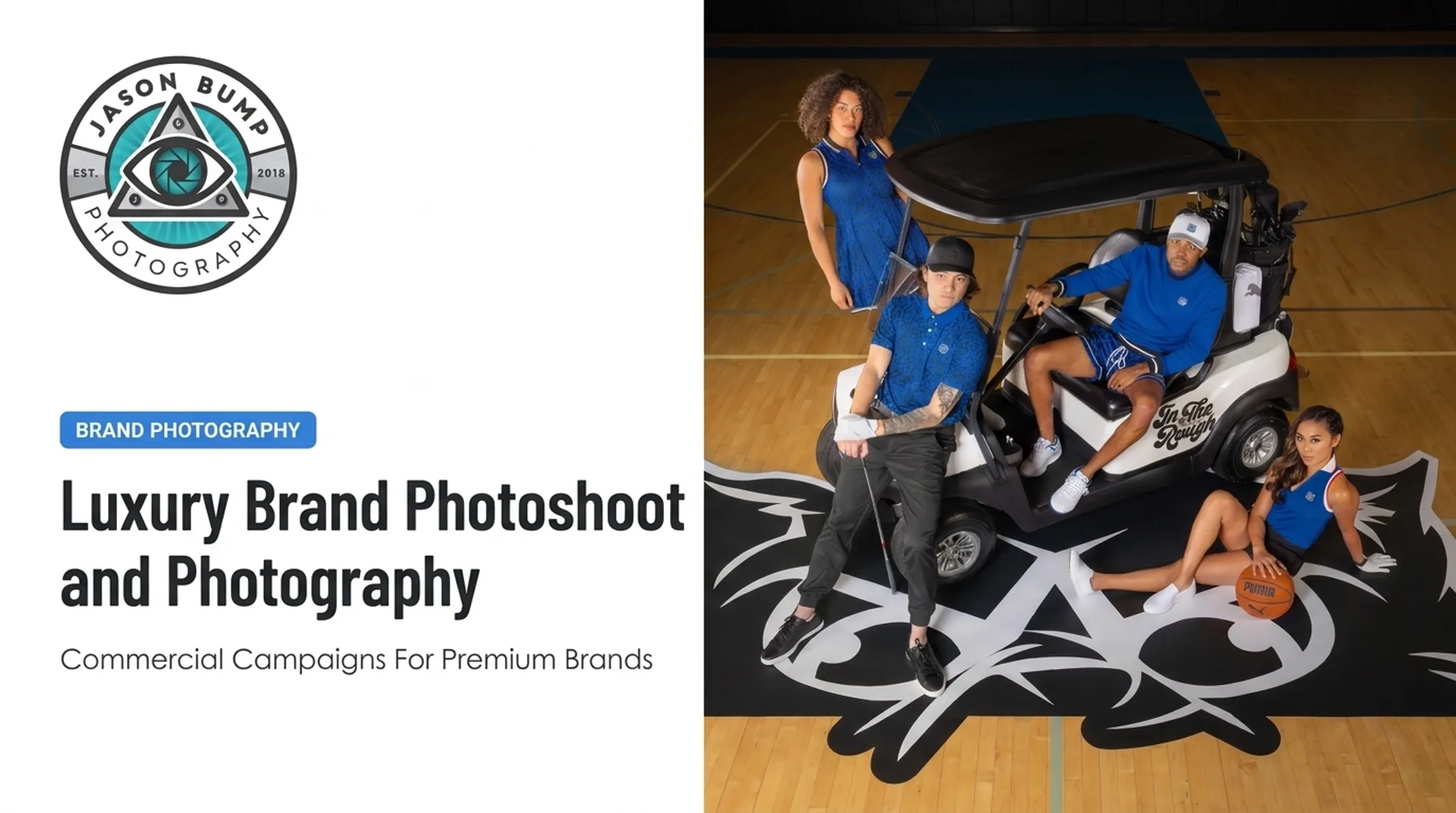
Jason Bump Photography's Short Par 4 campaign used this mix: flat-lay and lifestyle course shots plus close-ups of a patterned polo, tailoring, and golf glove. One shoot delivered both story and product clarity.
Prioritize Ruthlessly
Not every idea on the mood board needs to happen. Separate:
Secure must-have shots first, before light or energy fades. Save optional creative experiments for after the core assets are locked.
Weather, model energy, and location access are finite. Protect the frames the launch actually depends on.
Pair Location Work With Clean Product Imagery
Lifestyle imagery sells the story. Clean catalog shots sell the product on Amazon and ecommerce listings. Photo quality heavily influences whether shoppers buy, so pair on-location lifestyle frames with studio-clean detail shots. That mix covers the emotional pitch and the practical "what am I buying" question in one content set.
Conclusion
The right on-location fashion photography setting makes your brand's story clearer while staying safe, accessible, and workable for your crew on shoot day. Photogenic backdrops matter less than a location that supports the narrative and the production.
Jason Bump Photography plans and shoots lifestyle and brand campaigns in studio and on location across San Diego and Southern California. Work spans apparel, active-lifestyle, golf, eyewear, and consumer brands including Puma Golf, Lululemon, Adidas, and Oakley.
If you're planning a campaign and want a production partner who handles creative direction alongside the camera work, call (760) 433-7749.
Frequently Asked Questions
How much does a fashion photoshoot cost?
Pricing depends on photographer experience, location fees, permits, models, styling, crew size, shoot duration, and usage rights. Request a project-specific quote rather than relying on a flat rate — costs vary widely by scope.
What are the four main types of fashion photography?
Editorial, commercial/catalog, lifestyle, and runway/event photography are the commonly recognized categories. Real campaigns often blend editorial, commercial, and lifestyle approaches within the same shoot.
How do I choose a location for a fashion photoshoot?
Match the setting to your campaign goal, product category, and brand mood, then confirm lighting, access, privacy, permits, and weather backup before booking. The location should support your shot list, not limit it.
Do I need a permit for an on-location fashion shoot?
It depends on whether the site is public or private, the jurisdiction, crew size, and commercial use. Always confirm requirements with the property owner or local authority before production day.
What should I bring to an on-location fashion photoshoot?
Bring an approved shot list, wardrobe backups, garment care supplies, signed releases, weather protection, location directions, power solutions, and water. Add site-specific safety gear if the location requires it.